
Kingfish is one of the most versatile premium fish to ever land on a chef’s bench. Clean, lightly sweet, with firm pearl-white flesh and just enough natural oil to forgive a little inattention, it works as easily across a sashimi board as it does over a hot grill.
- When buying Kingfish, look for freshness indicators like clear eyes, bright red gills, and firm flesh. Avoid a strong fishy aroma.
- For pan-searing, score the skin to prevent curling and trim the dark bloodline for a cleaner taste, especially for raw preparations.
- The best cooking methods are pan-searing, grilling, or serving raw. Avoid overcooking; the flesh is best when just cooked through.
- Pan-sear fillets on high heat, skin-side down first. Cook 80% on the skin for a crisp finish before a quick flip.
- Pair raw Kingfish with high-acidity whites like Riesling, and grilled cuts with a lightly oaked Chardonnay to complement the texture.
That versatility is exactly why kingfish has become a quiet favourite in fine dining kitchens – and why it deserves more than a quick weeknight recipe at home. Cooked correctly, it is one of the most refined fish you can put on a plate.
This guide walks through the way our chefs at 6HEAD think about kingfish – how to choose it, prepare it, cook it, plate it and pair it. The philosophy is simple: source the best produce available, handle it with restraint, and let the fish speak for itself.

What is kingfish and why chefs love cooking with it
Kingfish is a large, fast-swimming pelagic fish prized for flesh that is firm, lightly sweet and a glossy pearl-white. It is rich enough to feel luxurious, but lean enough to never weigh down a plate – a balance that makes it equally at home raw, lightly seared or fully cooked.
A few characteristics chefs return to again and again:
- Clean, gently buttery flavour. Distinctive without being overpowering, which is why it carries delicate dressings, citrus and herbs so beautifully.
- Firm, structured flesh. Holds its shape under heat and slices cleanly for raw preparations such as sashimi, crudo and ceviche.
- Just enough natural richness. A modest oil content keeps the fish moist through cooking and means a single piece of produce can stretch across multiple techniques on the same menu.
It is the kind of ingredient that rewards simple cooking – a quality that aligns perfectly with the way our chefs work.
How to prepare kingfish before cooking
Great kingfish cookery starts long before the pan. Use this checklist to set yourself up:
- Buy fresh. Look for clear eyes, bright red gills, firm flesh that springs back when pressed, and a clean sea-spray smell. Anything with a strong fishy aroma or dull, sunken eyes is past its best.
- Ask for the right cut. Fillets suit grilling and pan-searing; the collar – rich, slightly fattier and tucked behind the gills – is exceptional grilled or roasted; sashimi-grade slices are reserved for raw preparations and require the freshest fish you can find.
- Remove the skin (or score it). For raw preparations, remove the skin entirely. For pan-seared fillets, leave it on and lightly score it – this stops the skin curling and helps deliver a crisp, golden finish.
- Trim the bloodline. The dark line running through the centre of the fillet carries a stronger, iron-like flavour. Trim it for a cleaner taste, especially for raw service.
- Portion evenly. Cut steaks or fillets to a consistent thickness – ideally 2.5–3 cm – so they cook at the same rate.
Take the chill off. Rest the fish at just-below room temperature for 10–15 minutes before cooking, so it doesn’t cool the pan when it lands.
Best cooking methods for kingfish
Three techniques showcase kingfish at its best. All share the same principle: high quality, light handling, and the smallest possible window between heat and plate.
1. Pan-searing
The most reliable method for a beautiful crisp-skinned fillet at home. A heavy, smoking-hot pan, a thin film of high-smoke-point oil and a confident wrist is all you need. The aim is golden, crackling skin and just-cooked, opaque flesh that flakes gently when pressed.
2. Grilling
Brings smoke and char to the equation – particularly good on collars and thicker steak-style cuts. Make sure the grill bars are clean and properly heated; the fish should hit them with a hiss, lift cleanly when ready to turn, and never be moved around in between.
3. Raw preparations
Sashimi, crudo, ceviche and tartare are where kingfish truly shines. With produce of the right grade, you remove the cooking entirely and let texture, temperature and seasoning do the work. A few drops of citrus, a flake of salt, a turn of pepper – that is often all it needs.
Across all three methods, the same rule applies. Kingfish is at its best just barely cooked through (or not at all). Look for an internal temperature around 50–52°C in the centre for cooked preparations – past 55°C, the flesh dries out and the gentle flavour fades.
Step-by-step guide to cooking kingfish perfectly
A great pan-seared kingfish fillet is one of the simplest things in cooking and one of the most satisfying when it comes off well. Follow these six steps:
- Start with even portions. Choose fillets around 2.5–3 cm thick. Anything thinner overcooks before the skin has time to crisp.
- Dry, score, season. Pat the skin completely dry, score it lightly with a sharp knife, and season generously with sea salt just before cooking – earlier and the salt draws out moisture you don’t want.
- Heat the pan hard. Use a heavy-based cast iron or carbon steel pan with a thin film of neutral high-smoke-point oil. Wait for the moment the oil shimmers and just begins to smoke.
- Skin-side down, press gently. Lay the fillet in away from you, skin-side down. Press for the first ten seconds with a fish slice or your fingertips so the whole skin makes contact and stays flat.
- Cook 80% on the skin. Around 3–4 minutes for a 2.5 cm fillet. You will see the flesh turning opaque from the bottom up. Flip only when most of the fillet has cooked through and the skin lifts cleanly from the pan.
Finish, rest, plate. Give the flesh side just 30–60 seconds, baste with a knob of butter and a few thyme leaves if you like, then rest for one minute before plating. Serve skin-side up so it stays crisp all the way to the table.
Common mistakes when cooking kingfish
Most kingfish mishaps come down to one of four issues – all of them avoidable:
- Overcooking. The single most common way to undo good produce. Kingfish is meant to be just-cooked through; pull it early and let carry-over heat finish the job.
- Wet skin. A damp fillet steams instead of searing and the skin never crisps. Pat it dry, and dry it again right before it hits the pan.
- Heavy seasoning or marinades. Sugary glazes, dense spice rubs and lengthy marinades mask the gentle, sweet flavour of the fish. A light hand applied just before cooking serves it best.
Low or uneven heat. A pan that isn’t hot enough produces pale, soft skin and a centre cooked through before any colour develops. Get the surface properly hot and resist moving the fish around once it lands.
Kingfish wine pairing guide
Kingfish is meatier than most white-fleshed seafood – enough texture to handle wines that would overwhelm a more delicate fish, yet still undone by anything overly tannic or heavily oaked. A simple way to think about it:
- Raw or sashimi-style: reach for energy and lift. A taut Australian Riesling or a stony Sancerre brings the acidity needed to cut through the natural richness. A textural Italian white – Vermentino or a high-altitude Soave – echoes the saline, mineral side of the fish.
- Pan-seared with citrus and herbs: Sauvignon Blanc from the Adelaide Hills, Marlborough or the Loire is the classic match – its bright acidity and grassy notes flatter the fish without competing with it.
- Grilled or roasted (collars, thicker cuts): a lightly oaked Chardonnay – Margaret River or cool-climate Victorian – has the body and texture to stand up to the smoke and char. For something different, try a chilled Beaujolais cru or a slightly cool-served Pinot Noir.
The principle in every case is the same: pair on texture and acidity first, then on flavour. It is the same logic that guides the sommelier-curated wine list at 6HEAD, which showcases six leading wine regions and gives guests the opportunity to step outside the ordinary by the glass.
Serving and plating kingfish like a restaurant
Restaurant plating looks effortless because the work has already been done elsewhere – in sourcing, in preparation, and in restraint. The plate is the last 5%, not the first.
Sean Hall, Executive Head Chef at 6HEAD, sums up the philosophy:
“Using the best seasonal ingredients available are integral to the experience for the guest.”
A few finishing principles our chefs return to:
- Lead with the fish. The kingfish should always be the visual hero – clean lines, a glossy surface, and nothing on top of it that would obscure the cook.
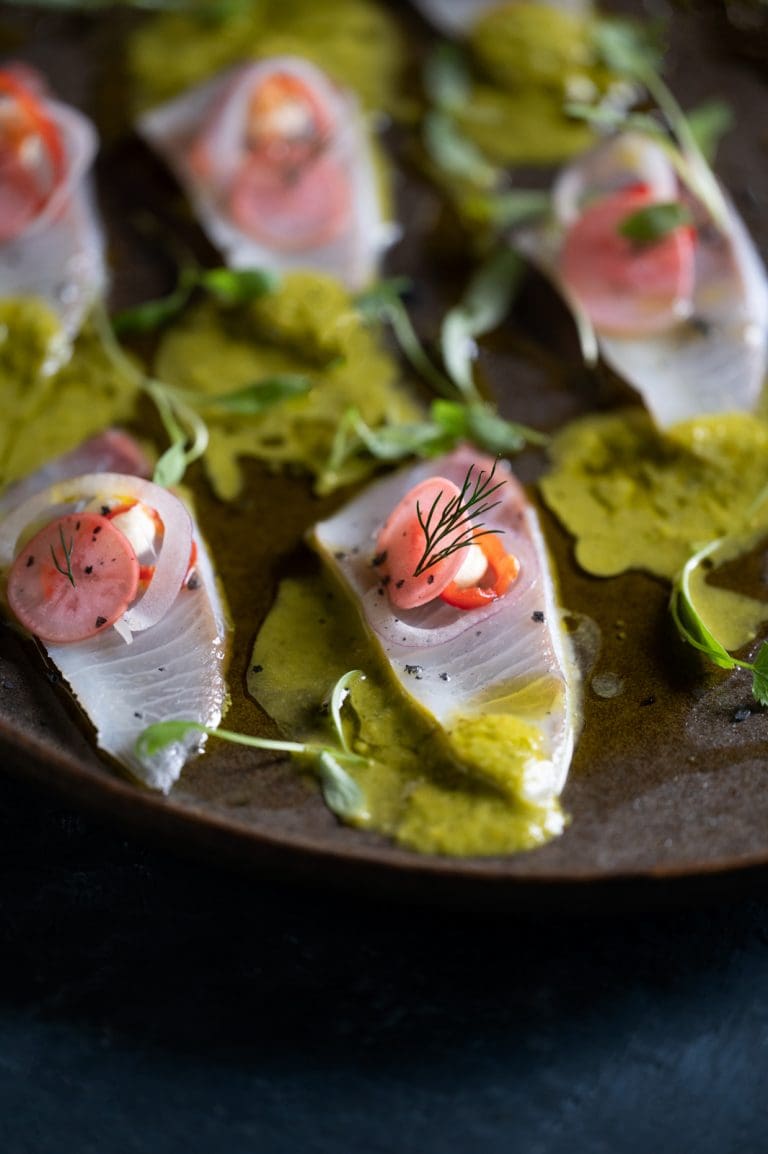
- Build flavour with acid and texture. A citrus dressing, a buttermilk emulsion or a sharp pickle adds brightness; a scatter of crisp herbs, eschalot, salmon roe or seasonal flowers gives the plate movement and contrast.
- Use the white space. Plenty of room around the fish makes a small portion read as elegant rather than mean. Wipe edges clean before plating leaves the table.
- Sauce sparingly. A spoon of dressing dragged across the plate, or pooled lightly underneath, looks more refined than a fully sauced fillet – and lets the diner control the balance with each bite.
It is the same approach behind our current Yellowtail Kingfish dish – citrus buttermilk dressing, salmon roe, eschalot, dill and linaria flowers – where every element exists to lift the fish, not to compete with it.
Experience iconic dining at 6HEAD
There is a particular pleasure in eating great seafood in a great room. At 6HEAD, our chefs work with premium Australian produce – selected from boutique providores and treated with the same restraint and respect described in this guide – and our sommeliers are there to walk you through a wine list built to complement every dish.
Whether you are sitting above the harbour at The Rocks in Sydney with the Opera House in full view, or watching the light change over Elizabeth Quay in Perth, the experience is built around the same idea: luxury that feels considered, expertise that feels personal, and food that is cooked exactly as it should be simply, and well.
To experience kingfish and our chef-curated seafood menu first-hand, book your table at 6HEAD. For more on the seafood we work with and how we source it, explore the seafood section of the Culinary Archives.