
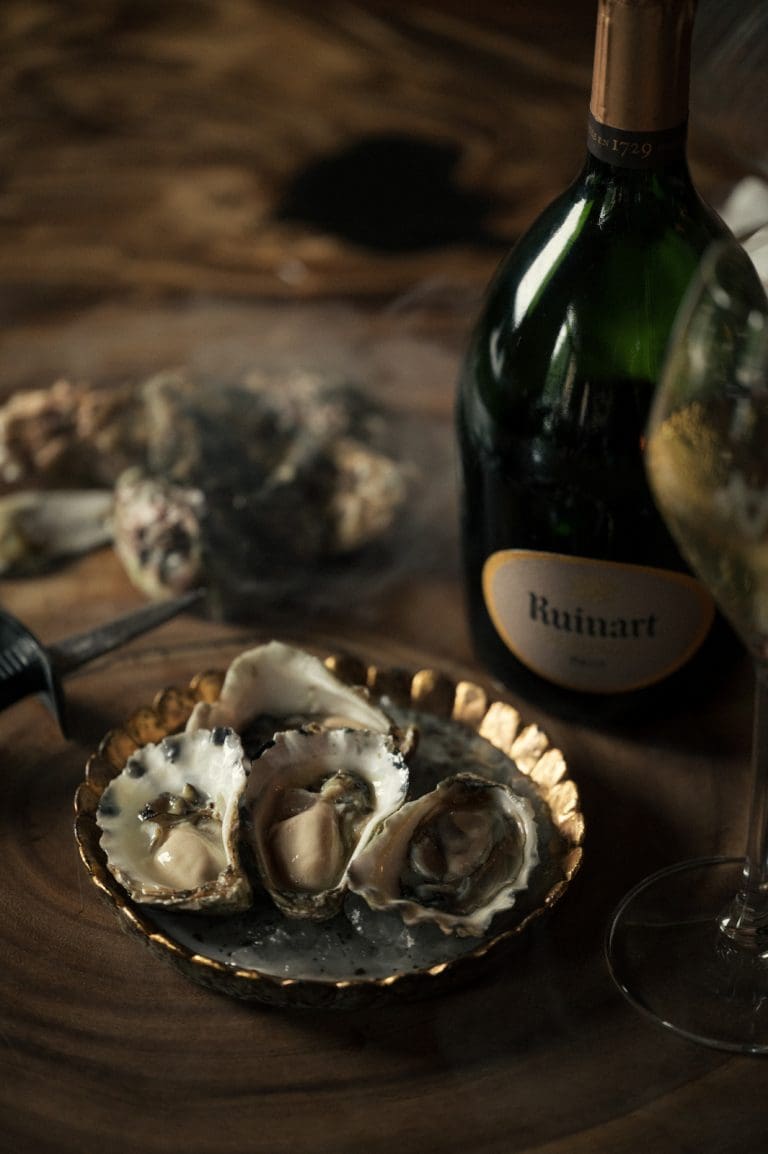
An oyster, served freshly shucked and resting in its shell, offers a rare kind of honesty. There’s no artifice; only the clean rush of brine, the gentle creaminess of the flesh, and the subtle imprint of the waters from which it came. In this moment, oyster dressing becomes not a necessity, but a decision.
At its most refined, dressing is a supporting element. A considered addition designed to elevate, not obscure. It sharpens salinity, enhances texture, and introduces contrast in fleeting, precise ways. As explored in our oyster guide, even the simplest accompaniments exist to complement the oyster rather than redefine it.
In the language of luxury dining, oyster marinades and dressings are about amplification; drawing out what is already exquisite.
- Oyster dressing should enhance, not overpower, acting as a supporting element to highlight the oyster's natural salinity and minerality.
- Classic toppings like mignonette work by creating a perfect contrast of acidity and texture against the oyster's richness.
- Pairing is key; a mineral-rich oyster suits clean acidity, while a creamier oyster pairs better with softer, aromatic notes.
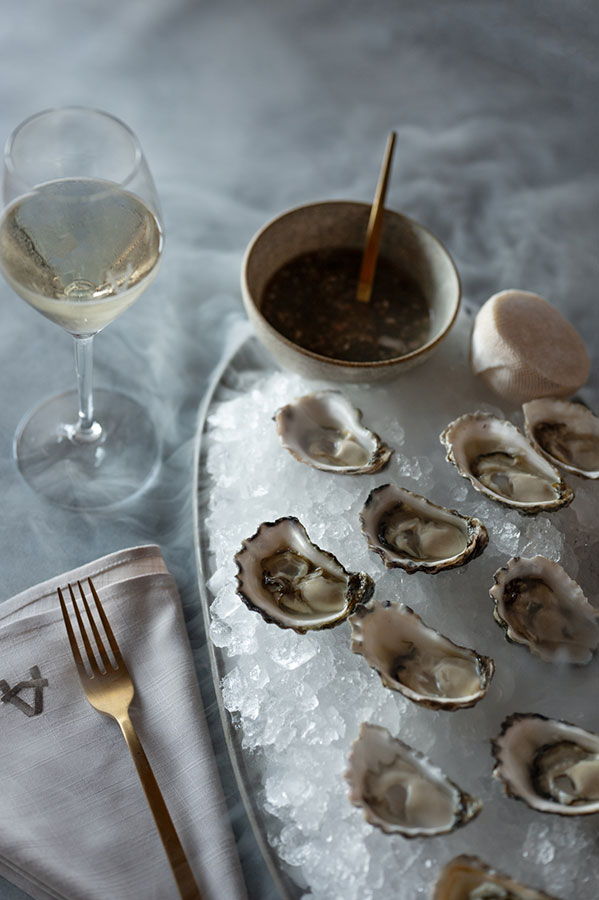
Why Oyster Dressing Should Enhance, Not Overpower
The finest oysters arrive at the table with an identity already fully formed. Their flavour is shaped by estuary, salinity, and season; a concept deeply embedded in 6HEAD’s approach to sourcing, where each oyster reflects the unique conditions of its origin.
To overwhelm such an ingredient is to erase its story.
This is why we adopt a philosophy of restraint. Dressing is applied sparingly with the intention of heightening perception rather than introducing dominance. Acidity may brighten the palate; a subtle aromatic note may add intrigue. But the oyster remains the centrepiece.
The goal is harmony. An interplay where the oyster’s natural salinity, sweetness, and minerality are brought into sharper focus.
True refinement lies not in what is added, but in what is deliberately withheld.
Classic Dressing for Oysters and Why It Works
Some oyster toppings have endured for generations because they achieve this balance with quiet perfection.
The classic mignonette (a delicate combination of vinegar and finely cut shallots) remains the benchmark. Its appeal lies in contrast. The acidity cuts cleanly through the oyster’s richness, while the shallot introduces a restrained sweetness and a gentle textural lift.
This interplay mirrors the oyster itself. Brine meets acid. Creaminess meets crispness. Each element feels intuitive, as though it belongs.
Other traditional accompaniments follow the same philosophy. A touch of citrus brightens without overwhelming. A whisper of horseradish introduces heat without masking flavour. Even a tomato-led mignonette, such as those found on our Sydney restaurant menu, maintain this balance, offering complexity while preserving clarity.
Modern Oyster Toppings Inspired by Fine Dining
Modern interpretations focus on layering sensory elements: temperature, texture, and aroma. A finely shaved granita might introduce a fleeting chill, enhancing freshness while dissolving almost instantly. A restrained infusion of seasonal produce can add aromatic lift without weight.
Texture, too, becomes a point of intrigue. A delicate dice or a barely perceptible oil offers contrast without heaviness. Even bolder profiles, such as those incorporating spice or fermented elements, are executed with precision.
With 6HEAD’s oyster experience, this philosophy is evident in our curated marinades and sauces, each designed to enhance the oyster’s natural profile rather than overshadow it.

Matching Oysters and Sauce to Oyster Varieties
An oyster’s origin defines its character, and in turn, how it should be dressed.
Across Australia’s estuaries, oysters develop distinct profiles. Some are intensely mineral, with a crisp, oceanic finish. Others are soft and creamy, with a gentle sweetness and lingering umami.
A highly mineral oyster responds beautifully to clean acidity, which sharpens its natural salinity and highlights its structure. In contrast, a creamier oyster benefits from softer, more rounded accompaniments like subtle aromatics or lightly sweet notes.
This interplay is at the heart of refined oyster service. It is not simply about pairing flavours, but about aligning characteristics. Salinity with acidity, texture with contrast, minerality with clarity.
At the highest level, each oyster is treated individually, its origin guiding every decision.
Oyster Recipes vs Restaurant-Style Oyster Dressing
The distinction between home-style oyster recipes and restaurant-level dressing is one of intent.
At home, oysters are often approached with generosity. Bold toppings, layered flavours, and a sense of indulgence. There is freedom in this approach, a willingness to experiment.
In fine dining, however, precision takes precedence.
Every element is measured. Every garnish has purpose. Presentation is meticulous, with each oyster plated to emphasise both its natural beauty and its carefully chosen accompaniment. Timing is equally important. Dressings are applied at the last possible moment to preserve freshness and integrity.
The difference is subtle but profound. At home, oysters are a dish. In a restaurant setting, they are a composition; a study in balance, texture, and restraint.
When to Serve Oysters Without Dressing
There are moments when the highest form of oyster service is no dressing at all.
Premium oysters, sourced at their peak and served immediately, possess a clarity that requires nothing further. Their salinity is balanced, their texture pristine, their flavour complete.
As noted in our oyster guide, tasting an oyster natural is often the best way to understand its true profile before introducing any accompaniment.
Serving oysters without dressing is an expression of confidence — in the produce, in the sourcing, and in the diner’s ability to appreciate nuance. It allows the oyster to speak in its purest voice.
And in that simplicity, there is a quiet kind of luxury.
Experience Iconic Dining at 6HEAD
At 6HEAD, oysters are a reflection of philosophy.
Set within architecturally inspired spaces defined by stone, timber, and heritage textures, our restaurants offer a dining environment that feels both grounded and elevated. In Sydney, guests dine along the harbour’s edge, where sweeping waterfront views form part of the experience.
Explore the full experience at the Sydney restaurant or discover the western counterpart via the Perth restaurant, where dining near Elizabeth Quay offers its own sense of place and perspective.
Across both locations, the approach remains consistent: impeccable sourcing, thoughtful execution, and immersive service standards. Oysters are presented with carefully curated dressings — or none at all — allowing their natural qualities to shine.
Guided by expert sommeliers, guests are invited to explore the nuanced relationship between oyster varieties, dressings, and wine pairings. Each recommendation is tailored, each detail considered.
Here, overlooking icons like the Sydney Opera House or the tranquil waterfront of Elizabeth Quay, the oyster becomes more than a taste of the sea.